What Is Revenue Leak?
You closed the meeting. The call went well. But something got lost. A next step nobody wrote down. A commitment nobody logged. A follow-up that never happened.
That's revenue leakage. And it's not a billing error.
Most definitions frame revenue leakage as a finance problem: Underbilled contracts, pricing exceptions, discount approvals nobody tracked. That's real. But for B2B sales teams, the leakage starts earlier, inside the sales process itself, before a deal ever reaches the invoice stage.
This piece breaks down what revenue leakage actually means for sales organizations, where it hides inside your pipeline, and how to stop it without adding another tool to your stack.
What Is Revenue Leakage?
Revenue leakage is the gap between the revenue a business should earn and the revenue it actually collects.
The classic definition focuses on financial operations: contracts that don't get billed correctly, discounts applied inconsistently, pricing tiers that slip through approval workflows. Real problems, especially for companies with complex pricing or high transaction volumes.
But leakage in B2B sales looks different. It's not a billing system failure. It's a signal failure. Information generated during the sales process, context from calls, commitments made in meetings, next steps agreed on, disappears before it can move a deal forward.
The result isn't a missing invoice. It's a lost deal.
Where Revenue Leakage Actually Hides in Sales
1. The post-meeting black hole
A discovery call ends. The rep knows what was discussed. The buyer expects a follow-up based on specific points raised in the conversation. But the rep doesn't write it down, or writes something so vague it's useless, and the follow-up doesn't match what the buyer expected.
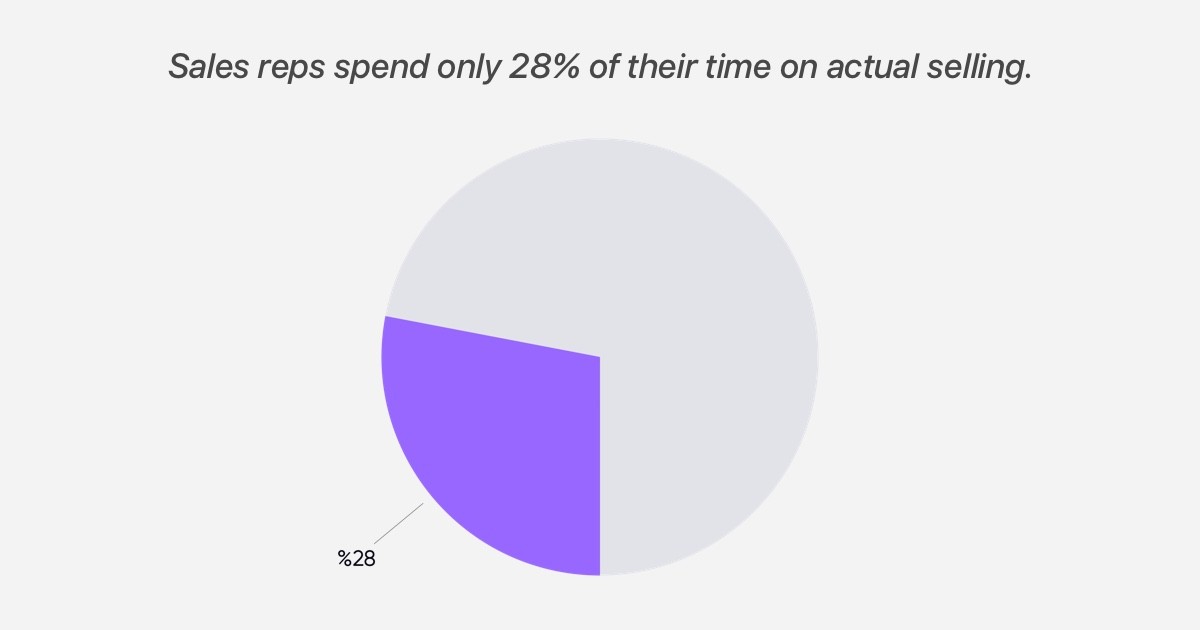
This happens constantly. Sales reps spend only 28% of their week on actual selling activities, according to Salesforce's State of Sales research. The rest goes to admin: logging calls, updating records, writing summaries that immediately get forgotten.
The information from that call existed for about 45 minutes. Then it leaked.
2. Next steps that belong to nobody
"Let's reconnect next week" is not a next step. But it gets treated like one constantly.
When next steps are vague, unassigned, or unlogged, deals stall. The rep thinks the ball is in the buyer's court. The buyer thinks someone is going to send a proposal. Nobody moves.
Research on B2B deal loss consistently points to poor follow-through, not price, not competition, as the primary reason deals go quiet after a promising conversation.
3. Pipeline Data Quality: Why Your CRM Is Lying to You
If your CRM doesn't reflect what's actually happening in deals, your pipeline is fiction.
Stage data entered manually, days or weeks after the actual conversation, is filtered through memory and optimism. Reps update stages to show progress, not to show reality. Managers build forecasts on that data. Leadership makes decisions based on those forecasts.
This is the most expensive form of revenue leakage because it compounds. Bad CRM data produces bad forecasts. Bad forecasts produce bad resource allocation. Bad resource allocation produces missed quarters.
4. The handoff gap
When a deal moves from SDR to AE, or from AE to customer success, critical context gets lost. What was promised. What objections came up. What the buyer actually cares about.
The new owner of the relationship starts from near-zero. The buyer notices. Deals that survive the handoff often restart the trust-building process from scratch, adding weeks to cycles that were already close.
Research from Gartner shows that B2B buyers interact with an average of nine different roles before making a purchase decision. Every handoff that loses context is another reason for the buyer to slow down or walk away.
5. Slow response at the wrong moment
Buyers move fast when they're ready and go cold fast when momentum breaks.
A rep who responds to a serious inbound inquiry in 24 hours instead of 2 hours doesn't just lose time. According to Harvard Business Review research, companies that follow up within an hour are seven times more likely to qualify a lead than those that wait even 60 minutes longer. After that window closes, the conversation rarely restarts.
Speed-to-lead is almost entirely an operational problem, not a motivation problem.
How Much Is Revenue Leakage Actually Costing?
The honest answer: most companies don't know, because the leak is invisible.
Revenue leakage doesn't show up as a line item. It shows up as deals marked "closed lost" with no clear cause, pipeline that never closes despite healthy coverage ratios, forecast misses that get explained away as market conditions, and win rates that stay flat despite headcount increases.
Boston Consulting Group has estimated that revenue leakage across industries can reach 5% of total revenue. For a $10M ARR company, that's $500K walking out the door without anyone noticing.
Companies with mature RevOps functions, those that align sales, marketing, and customer success around shared data, see meaningfully higher revenue growth than those operating in silos. That gap is, in large part, the cost of leakage.
How to Fix Revenue Leakage in Your Sales Process
Start with the meeting, not the CRM
The moment where most sales leakage begins is the meeting. Not the CRM entry. Not the deal stage. The conversation itself: what was said, what was committed, what the buyer's actual concerns were.
If you can capture that moment accurately, everything downstream gets better. The follow-up is relevant. The next step is specific. The CRM record reflects reality.
Make CRM updates automatic, not optional
Manual CRM entry is a tax on your reps' time and a source of unreliable data. When updating the CRM is optional, or when it happens hours after the conversation, the data degrades fast.
The fix isn't better training or more enforcement. It's removing the manual step entirely. When meeting notes, action items, and deal updates flow into the CRM automatically after every call, the data stays current without adding friction to the rep's day.
This is exactly what RevCycle does. It joins your meetings, captures what matters, and syncs to your CRM so your pipeline reflects reality, not memory.
Make next steps explicit and owned
Every deal conversation should end with a specific next step: Who does what, by when. Not "let's talk soon." A named action, a named owner, a date.
If your reps can't consistently do this from memory, the system should do it for them.
Audit your handoff process
Map every point where deal ownership changes hands. At each handoff, ask: what information transfers, in what format, and who confirms receipt?
If the answer involves a Slack message and a hope, you have a leakage point.
Track the right signals
Pipeline coverage ratio tells you how much pipeline you have. It doesn't tell you how healthy it is. Add these to your tracking:
Average time between deal stages
Follow-up completion rate per rep
Win rate by pipeline entry source
Deal velocity change after handoffs
These metrics won't eliminate leakage on their own, but they'll make it visible. Visible problems get fixed.
The Bigger Picture
Revenue leakage is a systems problem, not a people problem.
Your reps aren't skipping CRM updates because they don't care. They're doing it because the form is annoying and they have 12 other things to do after a call. Your managers aren't forecasting incorrectly because they're bad at math. They're working with the data they have.
The fix is infrastructure, not pressure. When the right information flows automatically from conversations into your systems, leakage stops being invisible. Deals get followed up. Pipelines reflect reality. Forecasts become useful.
That's what RevOps is actually for, and why companies that get it right grow faster than those that don't.
FAQ
What is revenue leakage?
Revenue leakage is the difference between the revenue a business should earn and what it actually collects. In B2B sales, it most commonly appears as lost deal context, missed follow-ups, inaccurate pipeline data, and poor handoffs between teams, all of which cause deals to stall or fail.
What causes revenue leakage in B2B sales?
The most common causes are manual CRM entry that leads to inaccurate data, meeting notes that never get recorded or shared, vague next steps with no clear owner, slow response times at critical moments, and context loss during deal handoffs. Most leakage isn't dramatic, it's a series of small gaps that compound over time.
How do you measure revenue leakage?
Start by looking at deal loss patterns: closed-lost reasons, average deal velocity, follow-up completion rates, and forecast accuracy over time. If your pipeline consistently shows healthy coverage but your close rates are low, you likely have leakage. Comparing win rates before and after process changes can also surface where deals are quietly bleeding.
How does RevCycle help prevent revenue leakage?
RevCycle automatically captures what happens in sales meetings — notes, next steps, commitments, and syncs that context to your CRM without requiring manual input from reps. This keeps pipeline data accurate, ensures follow-ups happen, and reduces the information loss that causes deals to go cold.